Commercial Solar Power Plant for Businesses
Cost, ROI & Verified EPC Partners
Compare commercial solar power plant costs, understand CAPEX, OPEX and PPA options, estimate your potential ROI, and connect with verified EPC partners for reliable solar solutions tailored to your business needs.
Get Free Commercial Solar Quote
Commercial Solar Power Plant
for Businesses
A commercial solar power plant lets businesses generate their own electricity from rooftops, carports or unused land and cut one of their largest operating costs. Commercial and industrial consumers usually pay the highest electricity tariffs, which is why solar for business often pays for itself within a few years. Whether you run a factory, hospital, hotel, school or warehouse, UrjaOne helps you compare quotes from verified solar EPC companies, choose the right financing model and install a plant that delivers reliable savings for 25 years.
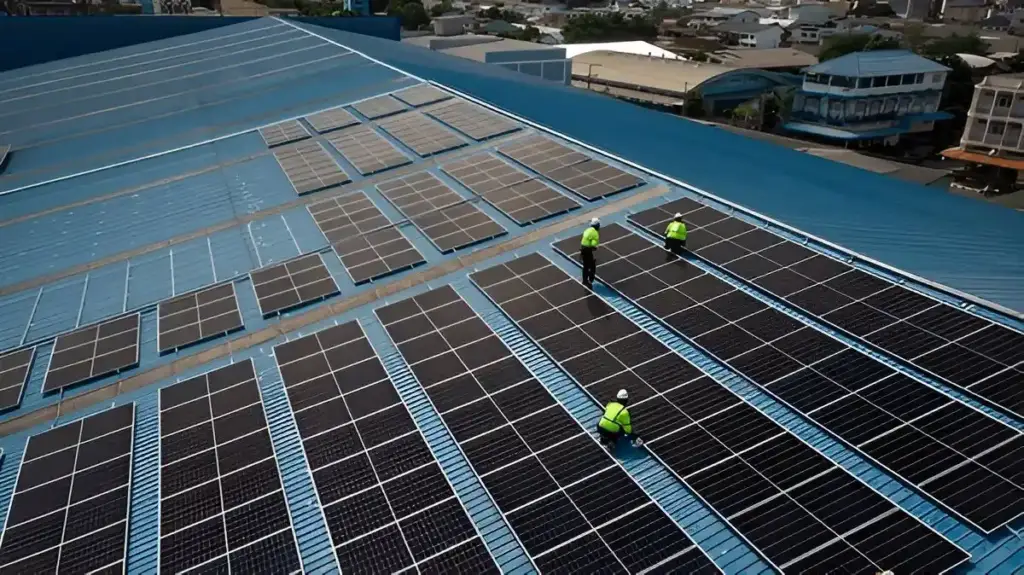
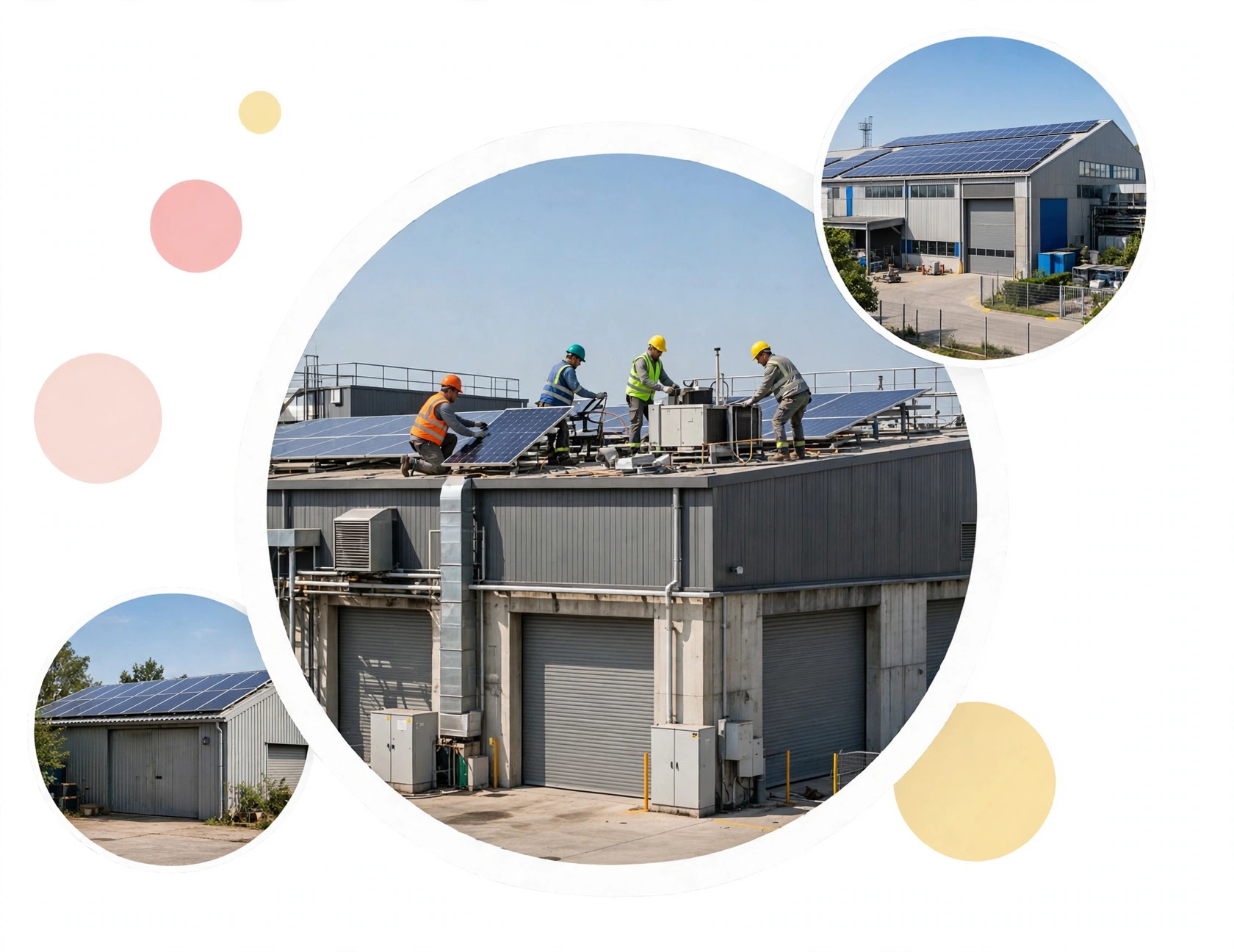
We support the complete solar installation process, from site assessment and system planning to panel installation, mounting structure, inverter setup, electrical connections and final testing. This ensures your commercial solar plant is properly installed and ready for reliable long-term operation.
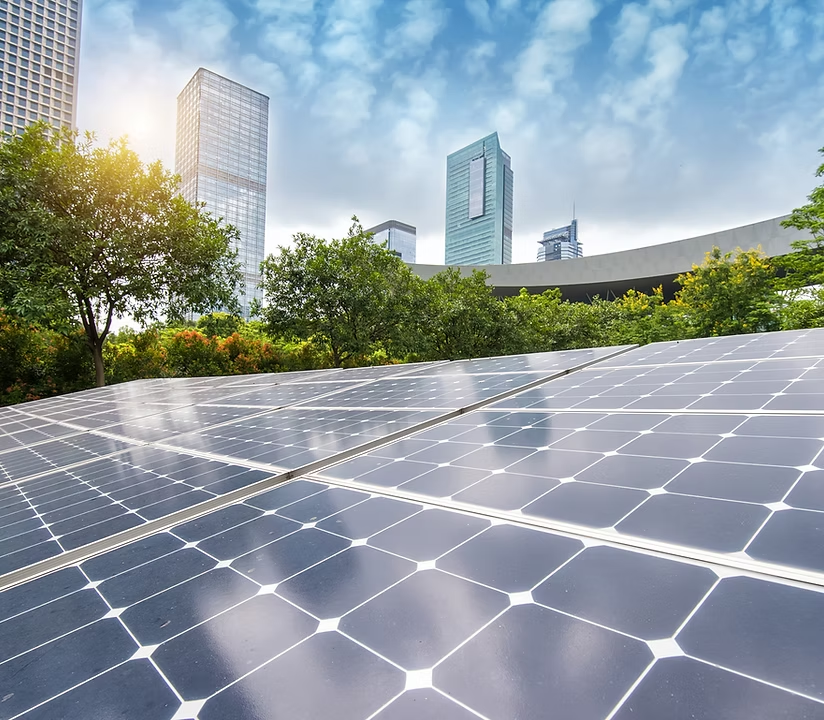
Solar Power Solutions for Your Business
Generate reliable solar power for your business with solutions designed around your energy needs, available space and operational requirements.
Commercial Solar Power Plant Cost in India (2026)
Compare indicative commercial solar power plant costs, rooftop requirements and annual generation across different system sizes.
| Capacity | Rooftop Area (Approx.) | Annual Generation (Approx.) | Indicative Cost* |
|---|---|---|---|
| 10 kW | 1,000 sq ft | 14,000 – 15,000 units | ₹4.0 – ₹5.0 lakh |
| 20 kW | 2,000 sq ft | 28,000 – 30,000 units | ₹8.0 – ₹10.0 lakh |
| 25 kW | 2,500 sq ft | 35,000 – 37,500 units | ₹10.0 – ₹12.5 lakh |
| 50 kW | 5,000 sq ft | 70,000 – 75,000 units | ₹20 – ₹25 lakh |
| 100 kW | 10,000 sq ft | 1.4 – 1.5 lakh units | ₹40 – ₹50 lakh |
| 200 kW | 20,000 sq ft | 2.8 – 3.0 lakh units | ₹78 lakh – ₹1.0 crore |
| 500 kW | 50,000 sq ft | 7.0 – 7.5 lakh units | ₹1.75 – ₹2.25 crore |
| 1 MW | 1 lakh sq ft rooftop or ~4–5 acres ground | 14 – 15 lakh units | ₹3.5 – ₹4.0 crore |
Indicative cost: Fill costs from your vendors' current quotes. Area assumes ~100 sq ft per kW on a shadow-free roof; generation assumes ~1,400–1,500 units per kW per year and varies by state and tilt.
What affects commercial solar plant cost?
Cost depends on module technology (mono PERC, TOPCon, bifacial), inverter brand, structure type (RCC, metal-sheet or elevated), cable runs, and whether monitoring and AMC are included. Larger plants cost less per watt. Share your requirement on UrjaOne to receive and compare quotes from multiple verified EPC companies.
Solar Solutions for Every Business
We provide customized commercial solar solutions for businesses across industries, helping organizations reduce energy costs and improve long-term energy efficiency.
Explore Solar SolutionsWhy UrjaOne Is the Right Choice for Your Commercial Solar Needs
UrjaOne connects businesses with trusted and verified solar professionals for reliable installation, competitive quotations, and complete commercial solar solutions for offices, factories, warehouses, hotels, hospitals, and other business properties.
Verified Commercial Solar Experts
Connect with verified and experienced solar professionals for commercial solar design, installation, consultation, maintenance, and ongoing support.
Solutions for Every Business
Find solar solutions designed for offices, factories, warehouses, hotels, hospitals, retail spaces, and commercial buildings based on your energy consumption and available space.
Compare Commercial Solar Quotes
Get competitive quotations from commercial solar providers and compare pricing, plant capacity, equipment, warranties, installation, and services before making a decision.
Complete Commercial Solar Support
From site assessment and system design to installation, commissioning, monitoring, maintenance, and AMC , get complete support throughout your commercial solar project.
ROI & Payback: 100 kW Solar Plant
See how annual solar generation, electricity savings and project cost can affect the payback period of a commercial solar power plant.
Annual Generation
~1,45,000
units per year
Grid Tariff Avoided
₹8
per unit*
Estimated Annual Saving
~₹11.6 Lakh
based on assumed tariff
Simple Payback
~3.5 Years
illustrative calculation
100 kW Commercial Solar ROI Example
A 100 kW solar plant generating around 1,45,000 units annually can deliver significant electricity savings when solar power offsets grid electricity consumption.
Annual generation: ~1,45,000 units
Grid tariff avoided: ₹8 per unit*
Annual saving: 1,45,000 × ₹8 ≈ ₹11.6 lakh
Illustrative project cost: ~₹40 lakh*
Estimated Simple Payback
~3.5 Years
Based on the illustrative project cost and assumed annual electricity savings.
*Actual electricity tariff and project cost vary by state, EPC quotation, system specifications, installation scope and site conditions. This is an illustrative calculation. Final ROI and payback should be calculated using the actual project quotation and applicable electricity tariff.
CAPEX vs OPEX (RESCO/PPA) vs Lease
Compare commercial solar financing models based on investment, ownership, payments, depreciation and maintenance responsibilities.
| Factor | CAPEX | OPEX / RESCO (PPA) | Lease / Loan |
|---|---|---|---|
| Upfront Investment | 100% by you | Zero or minimal | Low, EMI-based |
| Plant Ownership | You | Developer | You after tenure |
| What You Pay | One-time project cost | Fixed per-unit PPA tariff | Monthly EMI / lease rental |
| Typical Tenure | No financing tenure | Typically 15–25 years | As per loan or lease terms |
| Depreciation Benefit | Yes, subject to applicable tax rules | Generally with the asset owner | If you own the asset |
| Maintenance | Your responsibility / AMC | Developer | Your responsibility / AMC |
| Suitable For | Businesses with available capital | Businesses preserving cash | MSMEs with limited upfront capital |
CAPEX means the business purchases and owns the solar plant. Under OPEX / RESCO or a solar PPA, a third-party developer typically owns and operates the system while the customer pays for the solar electricity generated. Lease and loan structures spread the investment through periodic payments, subject to the financing terms.
Tax Benefit: Accelerated Depreciation on Solar Plants
Businesses that own a commercial solar power plant may be eligible for accelerated depreciation benefits under applicable income tax rules.
Accelerated Depreciation for Solar Power Plants
Businesses that own a solar power plant under the CAPEX model can claim accelerated depreciation on eligible solar assets under the Income Tax Act. The applicable depreciation treatment can reduce taxable income and may improve the overall financial returns of a solar investment.
The exact benefit depends on the applicable tax rules, ownership structure, tax regime and the date the solar plant is commissioned. Businesses should confirm the current depreciation rate and tax treatment with their chartered accountant before making financial projections.
Tax note: Tax benefits and depreciation rates can change based on applicable income tax provisions. Confirm the current rate and eligibility with your CA before publishing or using the benefit in an ROI calculation.
Subsidy, Net Metering and Green Energy Open Access
Understand the key rules that affect commercial and industrial solar projects, including subsidies, surplus power export and green energy open access.
Subsidy
Central subsidy schemes such as PM Surya Ghar are for residential rooftops. Commercial and industrial plants generally don't receive a central capital subsidy.
Net Metering
Export of surplus power under net metering, net billing or gross metering depends on your state's regulations and DISCOM limits.
Green Energy Open Access
Consumers with 100 kW or more of contracted load can buy solar power from an off-site plant under the Green Energy Open Access Rules, useful when roof space is limited.
How UrjaOne Works: From Enquiry to Commissioning
From sharing your requirement to installation, commissioning and monitoring, UrjaOne helps businesses connect with verified EPC partners and manage the commercial solar journey.
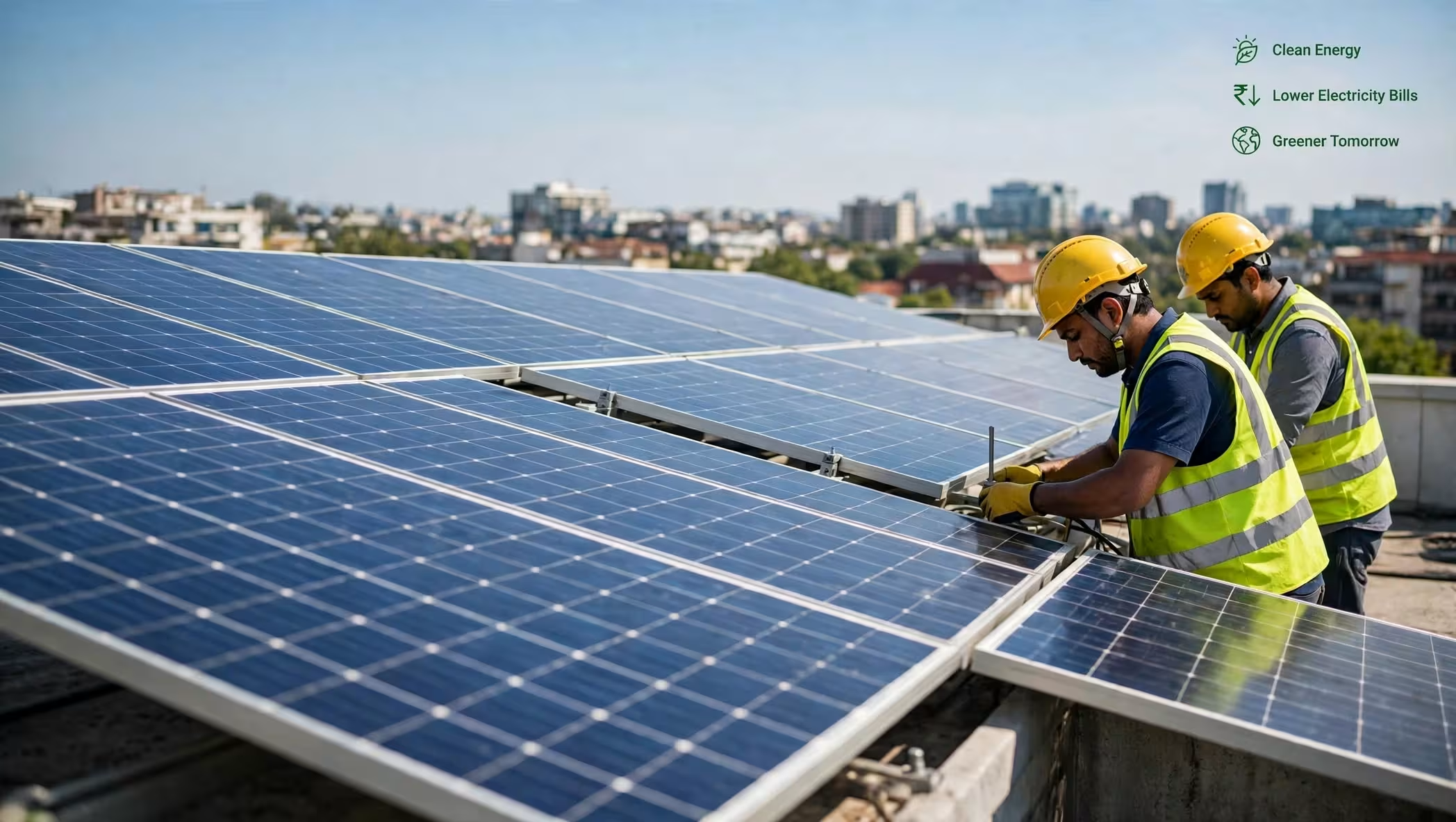
Share Your Requirement
Share your connected load, monthly bill, and roof or land details.
Free Site Survey and Load Analysis
A verified vendor conducts a free site survey and analyses your electricity load and solar requirements.
Compare 3+ Verified EPC Quotes
Compare 3+ quotes from verified EPC companies based on price, components and warranties.
Choose Your Financing Model
Choose the financing model that suits your business: CAPEX, OPEX/PPA or loan.
Design, Approvals and Net-Metering
Design, approvals and net-metering paperwork are handled by the EPC partner.
Installation, Commissioning and Monitoring
Complete installation, commissioning and monitoring are followed by AMC support for ongoing system maintenance.
How to Choose the Right Solar EPC Company
Compare solar EPC companies on components, engineering quality, warranties, maintenance support and commercial project experience before finalising your solar project.
Quality Components
ALMM-listed, tier-1 modules and a reputed inverter brand
Structure Design
Structure design suited to your roof (wind-load certified)
Performance Guarantee
Clear performance or generation guarantee
O&M / AMC Support
At least 5 years of O&M/AMC included or priced separately
Commercial Project Experience
References from commercial projects of similar size
Transparent BOQ
Transparent BOQ: brands, cable sizes, earthing and safety devices listed
Frequently Asked Questions
Find answers to common questions about commercial solar power plants, costs, installation, financing, maintenance, and renewable energy solutions for businesses.
What is the cost of a commercial solar power plant in India?
Commercial solar plant costs in India vary by system size, panel technology, inverter, structure, installation scope and project location. Indicative 2026 costs can range from around ₹40,000–₹50,000 per kW for many mid-sized projects, while larger plants may have a lower cost per watt. Final pricing depends on the EPC quote and site requirements.
What is the payback period of a commercial solar power plant?
The payback period depends on electricity tariffs, solar generation, system cost, financing, self-consumption and applicable charges. Many commercial projects are designed around a payback period of roughly 3–6 years, but the actual period should be calculated from your electricity bill and EPC quotation.
What Is CAPEX vs RESCO (OPEX) in Solar?
Under the CAPEX model, the business pays for the solar plant and owns the system. Under the RESCO or OPEX model, a third-party developer finances, owns and operates the plant, while the business typically pays for the solar electricity under an agreed commercial arrangement. Contract terms vary by project.
Can I sell surplus solar power to the DISCOM?
Surplus solar power can be exported to the grid where the applicable state regulations, DISCOM rules and project arrangement allow it. The treatment of exported electricity may involve net metering, gross metering, net billing or other mechanisms depending on the consumer category and state.
How long does it take to install a commercial solar plant?
Physical installation can take a few days to several weeks depending on plant capacity, roof or land conditions, structure work, equipment availability and project complexity. The complete project timeline can be longer because it may also include design, approvals, procurement, installation, testing and commissioning.
How much roof area is needed for a 100 kW solar plant?
A 100 kW rooftop solar plant generally requires around 10,000 sq ft of shadow-free roof area. The actual requirement can vary depending on panel efficiency, module layout, roof orientation, tilt, maintenance pathways and available space.
Is there a government subsidy for commercial solar power plants?
Central residential rooftop subsidies such as PM Surya Ghar are intended for eligible residential consumers and do not generally apply to commercial solar plants. Commercial projects may, however, benefit from applicable state policies, tax provisions, renewable-energy regulations or other incentives depending on the project and location.
How much depreciation can I claim on a solar power plant?
Businesses may be able to claim depreciation on eligible solar power assets under applicable Indian income-tax rules. The allowable rate and treatment depend on the asset classification, ownership structure, tax regime and applicable rules for the relevant financial year. Businesses should confirm the current treatment with their tax professional.
What is green energy open access and who is eligible?
Green Energy Open Access allows eligible consumers to procure electricity from renewable-energy generators through the electricity network instead of relying only on their existing supply arrangement. Eligibility, minimum consumption requirements, charges and approvals depend on applicable regulations and state implementation.
What maintenance does a commercial solar plant need?
Commercial solar plants require regular module cleaning, inverter checks, electrical inspections, cable and connection checks, earthing verification and performance monitoring. Preventive maintenance and periodic inspection help identify faults early and maintain system generation over the operating life of the plant.
What is the cost of a commercial solar power plant in India?
Commercial solar plant costs in India vary by system size, panel technology, inverter, structure, installation scope and project location. Indicative 2026 costs can range from around ₹40,000–₹50,000 per kW for many mid-sized projects, while larger plants may have a lower cost per watt. Final pricing depends on the EPC quote and site requirements.
How much roof area is needed for a 100 kW solar plant?
A 100 kW rooftop solar plant generally requires around 10,000 sq ft of shadow-free roof area. The actual requirement can vary depending on panel efficiency, module layout, roof orientation, tilt, maintenance pathways and available space.
What is the payback period of a commercial solar power plant?
The payback period depends on electricity tariffs, solar generation, system cost, financing, self-consumption and applicable charges. Many commercial projects are designed around a payback period of roughly 3–6 years, but the actual period should be calculated from your electricity bill and EPC quotation.
Is there a government subsidy for commercial solar power plants?
Central residential rooftop subsidies such as PM Surya Ghar are intended for eligible residential consumers and do not generally apply to commercial solar plants. Commercial projects may, however, benefit from applicable state policies, tax provisions, renewable-energy regulations or other incentives depending on the project and location.
What Is CAPEX vs RESCO (OPEX) in Solar?
Under the CAPEX model, the business pays for the solar plant and owns the system. Under the RESCO or OPEX model, a third-party developer finances, owns and operates the plant, while the business typically pays for the solar electricity under an agreed commercial arrangement. Contract terms vary by project.
How much depreciation can I claim on a solar power plant?
Businesses may be able to claim depreciation on eligible solar power assets under applicable Indian income-tax rules. The allowable rate and treatment depend on the asset classification, ownership structure, tax regime and applicable rules for the relevant financial year. Businesses should confirm the current treatment with their tax professional.
Can I sell surplus solar power to the DISCOM?
Surplus solar power can be exported to the grid where the applicable state regulations, DISCOM rules and project arrangement allow it. The treatment of exported electricity may involve net metering, gross metering, net billing or other mechanisms depending on the consumer category and state.
What is green energy open access and who is eligible?
Green Energy Open Access allows eligible consumers to procure electricity from renewable-energy generators through the electricity network instead of relying only on their existing supply arrangement. Eligibility, minimum consumption requirements, charges and approvals depend on applicable regulations and state implementation.
How long does it take to install a commercial solar plant?
Physical installation can take a few days to several weeks depending on plant capacity, roof or land conditions, structure work, equipment availability and project complexity. The complete project timeline can be longer because it may also include design, approvals, procurement, installation, testing and commissioning.
What maintenance does a commercial solar plant need?
Commercial solar plants require regular module cleaning, inverter checks, electrical inspections, cable and connection checks, earthing verification and performance monitoring. Preventive maintenance and periodic inspection help identify faults early and maintain system generation over the operating life of the plant.
What Our Clients Say?
Hear from businesses and commercial property owners about their experience with our reliable solar solutions and professional installation services.
Arjun Mehta
OFFICE OWNER
Installing solar for our office has helped us manage our electricity costs more effectively. The entire process from consultation to installation was smooth and professional.
Rohit Agarwal
WAREHOUSE OWNER
Our warehouse has significant daytime electricity consumption. The commercial solar system has helped reduce our dependence on grid power and improved our overall energy management.
Neha Kapoor
RETAIL BUSINESS OWNER
We wanted a reliable solar solution for our retail property. The system was planned according to our energy requirements and the installation quality was excellent.
Karan Malhotra
HOTEL OWNER
Our hotel has high daily energy requirements, so solar was an important investment for us. The installation was professionally managed with minimal disruption to our operations.
Suresh Gupta
FACTORY OWNER
Solar has become an important part of our factory's energy strategy. The system was designed around our power consumption and has provided reliable daytime electricity generation.
Anjali Shah
COMMERCIAL PROPERTY OWNER
From initial consultation to final commissioning, everything was handled professionally. We now have a dependable solar solution that supports our commercial property's energy needs.
Let's Connect
Get Your Commercial Solar Quote
Get expert solar advice for your commercial property and discover the right solar solution to reduce electricity costs and improve energy efficiency.



Trusted solar solutions for commercial businesses
Explore Related Solar & Energy Services
Explore our commercial solar, rooftop solar, energy management, EV charging and renewable energy solutions designed for businesses and organizations.