
Rooftop Solar Panel Installation for Home –
Cost, Subsidy & Verified Installers (2026)
Cut your electricity bill by up to 90% with rooftop solar. Get a central subsidy of up to ₹78,000 under PM Surya Ghar, and compare quotes from verified installers in your city, all in one place.
- ✓ Free site survey and system sizing
- ✓ Compare 3+ quotes from verified vendors
- ✓ Subsidy, net metering and loan paperwork support
Get Free Residential Solar Quote
Residential Solar Plant
Installation Services
A rooftop solar system for your home uses solar panels on your roof to generate your own electricity. In India, a home solar system typically pays for itself in 3–5 years and keeps producing power for 25 years or more.
With the PM Surya Ghar subsidy now covering up to ₹78,000 of the cost, solar has never been more affordable for Indian households.
This guide covers exactly what a home solar system costs in 2026, what size you need, how much you will save, and how installation works, so you can make a confident decision.
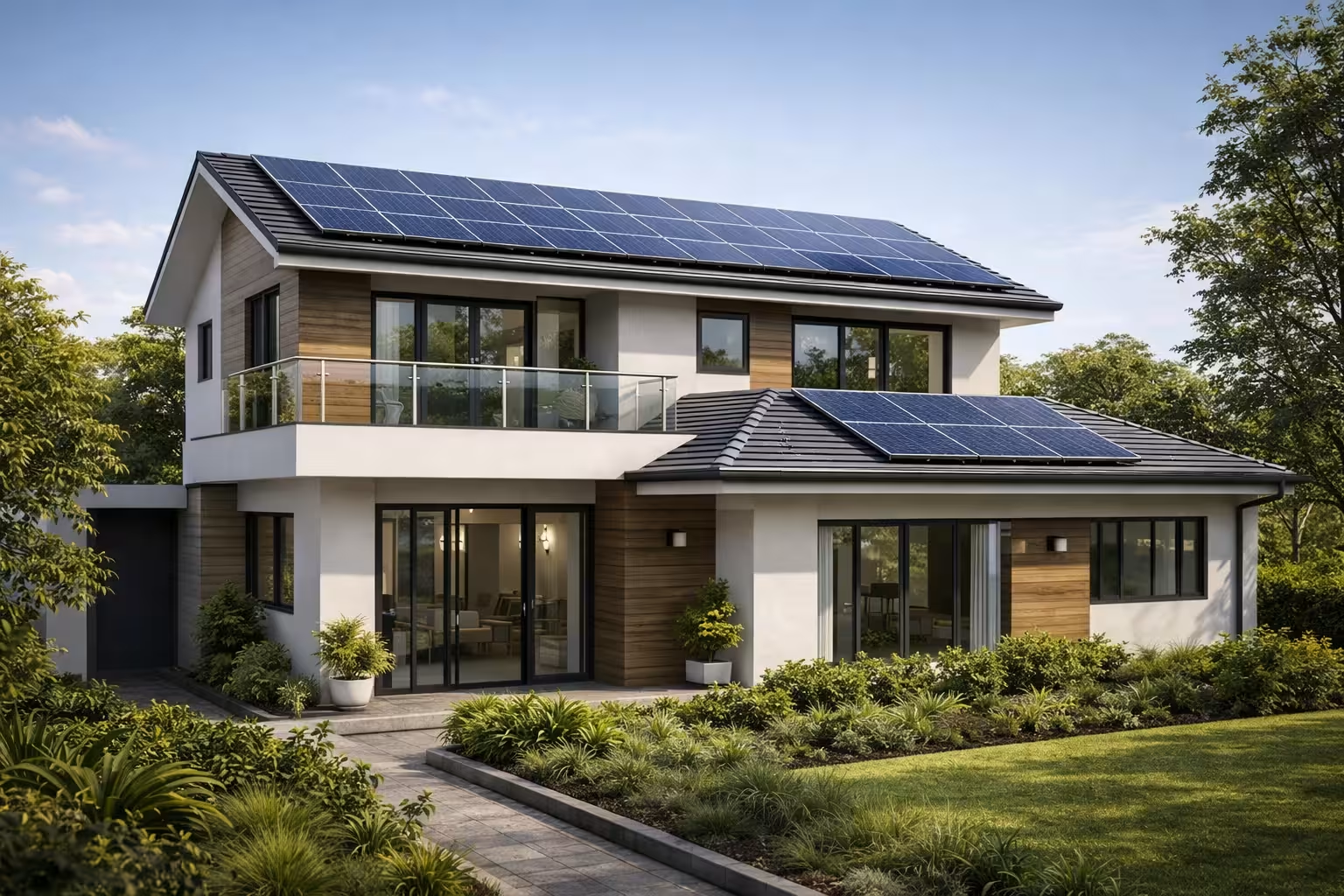
Home Solar From ₹___ After Subsidy
Explore rooftop solar costs, subsidy benefits and installation options for your home with verified solar installers.
Why Choose UrjaOne for Your Residential Solar Needs
UrjaOne helps homeowners compare verified solar installers, understand quotations, and get support across the residential solar journey.
Choice
Compare quotes from multiple verified installers, not a single brand.
Transparency
Every quote lists panel, inverter and structure brands.
Support
Help with subsidy registration, net metering and solar loans.
After-sales
AMC, cleaning and repair services through the same platform.
Rooftop Solar Installation Process: Step by Step
Follow the complete rooftop solar installation process, from enquiry and site survey to installation, net metering, commissioning and subsidy credit.
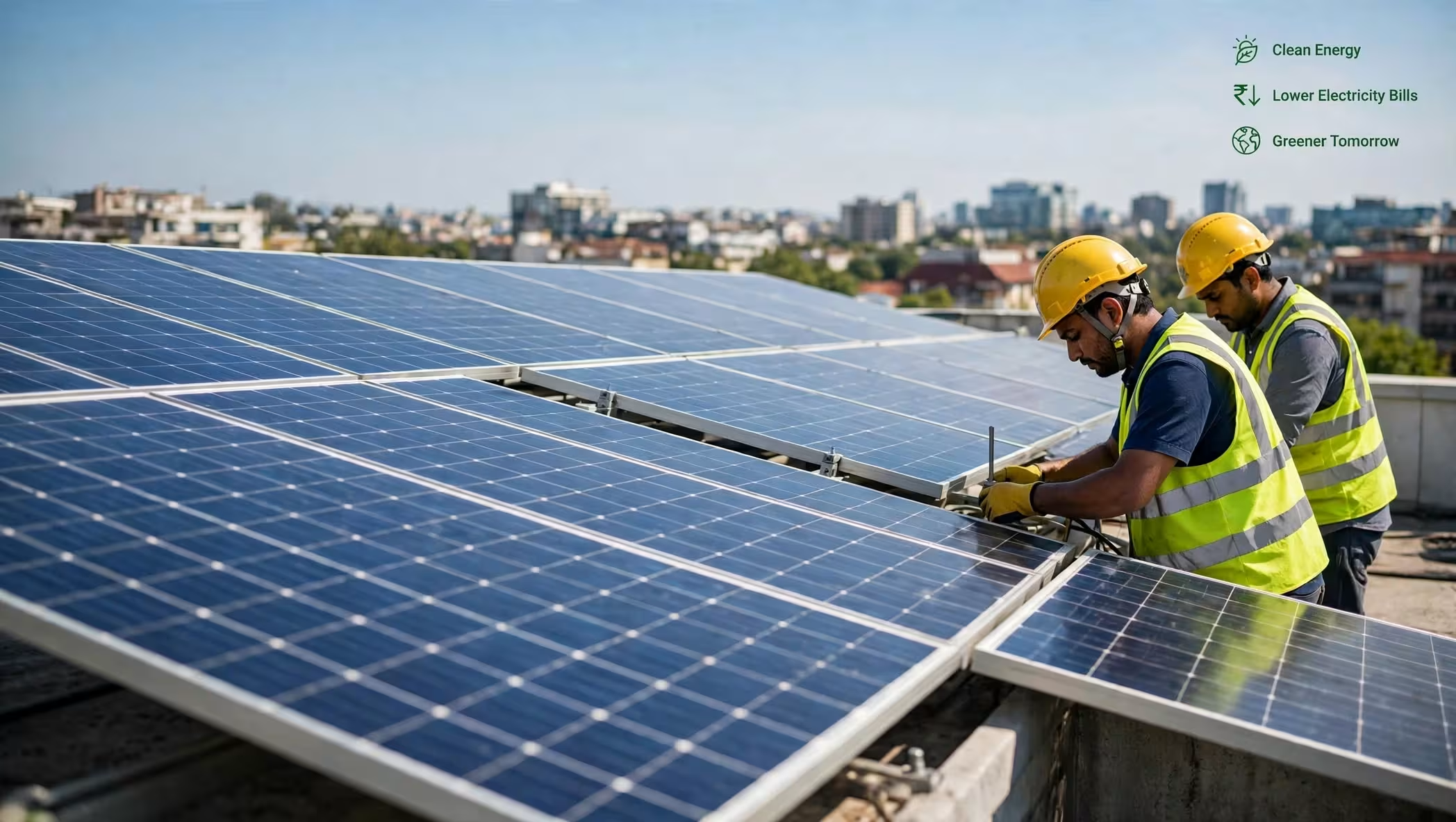
Enquiry and free site survey (Day 1–3)
A verified vendor checks roof area, shade, structure and your electricity usage.
Compare quotes and choose a vendor (Day 3–7)
Compare price, panel and inverter brands, structure and warranties on UrjaOne.
Register for subsidy (Day 7–10)
Apply on the PM Surya Ghar portal; your DISCOM gives feasibility approval.
Installation (1–3 days)
Structure, panels, inverter, earthing and wiring are installed.
Net meter application and inspection (2–4 weeks)
The DISCOM inspects the system and installs the bi-directional meter.
Commissioning
The system starts exporting surplus power; you get monitoring on your phone.
Subsidy credit (about 30 days after commissioning)
The subsidy is transferred directly to your bank account.
Solar Panel Installation Cost for Home in 2026
The cost of a rooftop solar system depends on its capacity, equipment, roof conditions, installation requirements and location. The table below provides indicative residential rooftop solar price ranges for common system sizes.
| System Size | Indicative Price* | Central Subsidy | Approx. Cost After Subsidy | Monthly Generation | Roof Area Needed |
|---|---|---|---|---|---|
| 1 kW | ₹75,000 – ₹85,000 | ₹30,000 | ₹45,000 – ₹55,000 | 110 – 130 units | 80 – 100 sq ft |
| 2 kW | ₹1.30 – ₹1.60 lakh | ₹60,000 | ₹70,000 – ₹1.00 lakh | 220 – 260 units | 160 – 200 sq ft |
| 3 kW | ₹1.70 – ₹2.25 lakh | ₹78,000 | ₹0.92 – ₹1.47 lakh | 330 – 390 units | 240 – 300 sq ft |
| 5 kW | ₹2.90 – ₹3.60 lakh | ₹78,000 | ₹2.12 – ₹2.82 lakh | 550 – 650 units | 400 – 500 sq ft |
| 10 kW | ₹5.50 – ₹6.50 lakh | ₹78,000 | ₹4.72 – ₹5.72 lakh | 1,100 – 1,300 units | 800 – 1,000 sq ft |
*Indicative on-grid prices based on the 2026 market range of about ₹55,000–₹85,000 per kW and published residential solar pricing. Actual prices can vary by vendor, equipment, location and project requirements. Subsidy eligibility and amount are subject to applicable PM Surya Ghar scheme rules.
What Is Included in the Price?
DCR solar panels (mandatory for subsidy), on-grid inverter, mounting structure, DC and AC cables, earthing, lightning arrester, installation labour and generation monitoring. Net meter charges are set by your DISCOM and are usually extra.
Why Does the Price per kW Fall as Size Increases?
Fixed costs such as design, transport, labour and paperwork are spread over more panels, so a 5 kW system costs noticeably less per kW than a 1 kW system.
What Changes the Price?
Panel technology (mono PERC, TOPCon, bifacial), inverter brand, structure height (elevated structures cost more), roof type, cable length and your state.
Types of Home Solar Systems
Compare on-grid, hybrid and off-grid solar systems based on grid connection, battery requirement, power cuts, subsidy eligibility and typical use.
| Features | On-grid | Hybrid | Off-grid |
|---|---|---|---|
| Connected to grid | Yes | Yes | No |
| Battery | No | Yes | Yes |
| Works during power cuts | No | Yes | Yes |
| Eligible for PM Surya Ghar subsidy | Yes | Solar portion only; check with vendor | No |
| Relative cost | Lowest | Highest | Higher |
| Best for | Cities with reliable supply; maximum savings | Frequent power cuts + savings | No or very poor grid |
Which Solar Panel Is Best for Home?
Compare common solar panel technologies to understand which option fits your home's roof space, structure and energy requirements.
| Panel Type | Efficiency | Best For | Notes |
|---|---|---|---|
| Mono PERC | Good | Most homes; best value | The standard choice for residential rooftops |
| TOPCon | Higher | Limited roof space | Newer technology; better performance in heat |
| Bifacial | Higher (with reflective surface) | Elevated structures, white roofs | Generates from both sides; costs more |
What to Look for in a Home Solar Panel
For subsidy under PM Surya Ghar, panels must be DCR (made with Indian cells) and from an ALMM-listed manufacturer. Rather than chasing a single "best brand", choose a reputed Tier-1 manufacturer, a 25-year performance warranty, a reliable inverter brand with local service, and a strong mounting structure. UrjaOne vendors show the exact brands in every quote so you can compare like for like.
Subsidy for Home Solar
Under PM Surya Ghar Muft Bijli Yojana, homeowners get a central subsidy of ₹30,000 per kW for the first 2 kW and ₹18,000 for the third kW, up to a maximum of ₹78,000. Special-category states and UTs (North-East, Himachal, Uttarakhand, J&K, Ladakh, island UTs) get ₹33,000 per kW, up to ₹85,800. Some states add their own top-up on top of this. You must apply through the national portal and use a registered vendor.
Full PM Surya Ghar guide: eligibility, documents and how to apply →What Size Solar System Do I Need?
The right solar system size depends mainly on your monthly electricity consumption, available rooftop space and household usage. Use the units consumed on your electricity bill to estimate the solar capacity you need.
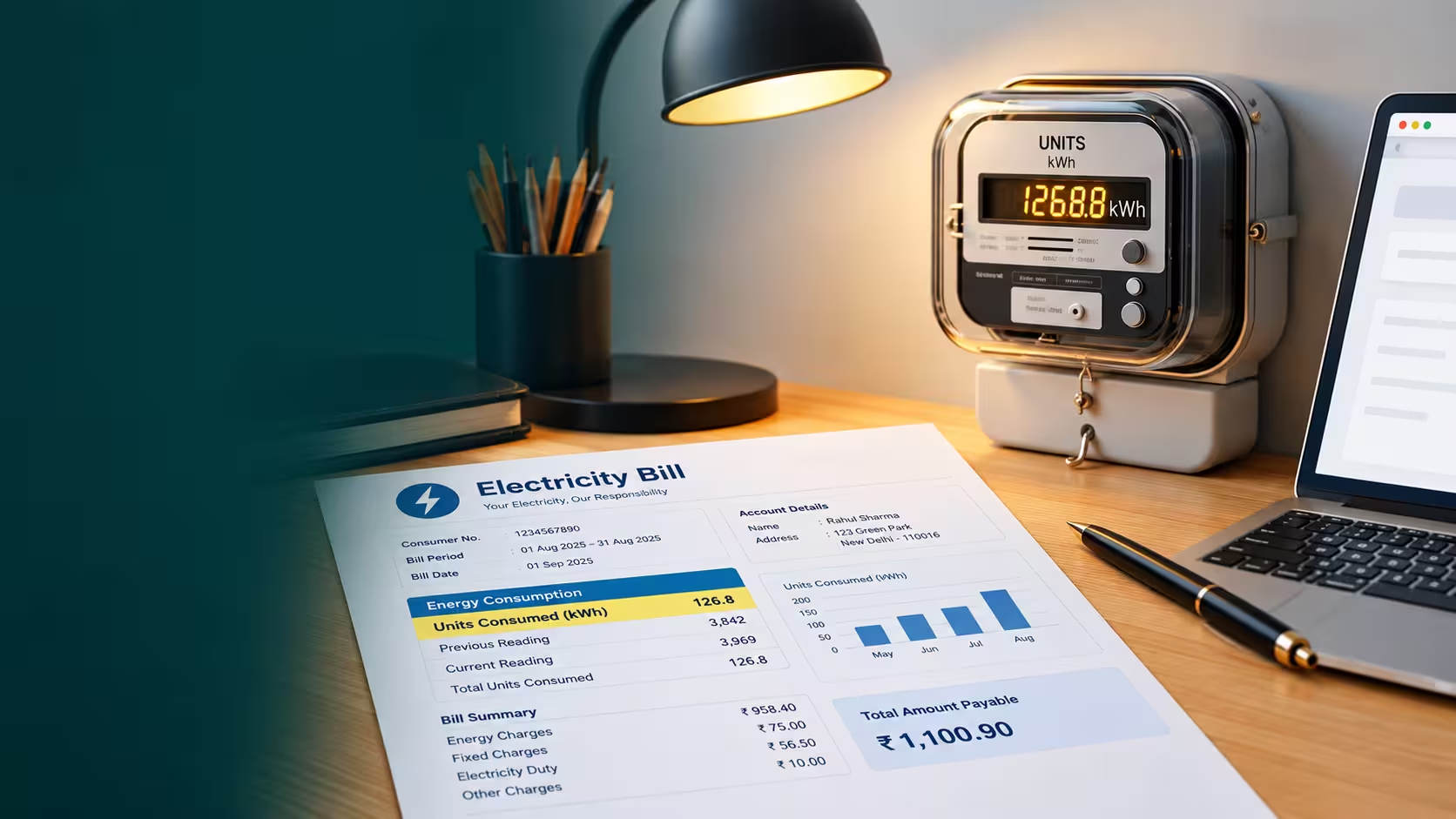
Check the units consumed field on your electricity bill when sizing your solar system.
| Monthly Electricity Bill | Monthly Units Used | Recommended System | Typical Home |
|---|---|---|---|
| Up to ₹1,000 | Up to 150 | 1 kW | 1 BHK, fans, lights, TV, fridge |
| ₹1,000 – ₹2,000 | 150 – 300 | 2 kW | 2 BHK with one cooler |
| ₹2,000 – ₹3,000 | 300 – 400 | 3 kW | 2–3 BHK with 1 AC |
| ₹3,000 – ₹5,000 | 400 – 650 | 5 kW | 3–4 BHK with 2 ACs |
| Above ₹6,000 | 800+ | 8 – 10 kW | Large home, multiple ACs, EV charging |
Quick Rule for Solar System Sizing
1 kW of solar produces about 4 units a day, or roughly 120 units a month. Divide your average monthly units by 120 to get the system size you need. Use the units figure on your bill, not the rupee amount, as tariffs vary by state and slab.
How Much Will You Save?
See how a residential solar system can reduce your electricity costs and recover its investment through monthly savings.
Worked Example: 3 kW System
3 kWPayback & Lifetime Savings
Payback period
About 4 years
25-year savings
₹7 lakh+
Payback: about 4 years. Over 25 years, this system saves more than ₹7 lakh at today's tariffs, and more if tariffs rise. Surplus units exported to the grid are credited to your bill under net metering.
Calculate Your Potential Solar Savings
Enter your monthly electricity usage and tariff to estimate your potential savings with rooftop solar.
Technology Solutions for Every Industry
Our technology solutions help organizations across different industries improve operations, manage data and build smarter and more connected systems.
Explore SolutionsHome Solar Maintenance
Home solar systems need little maintenance. Clean panels every 2–3 weeks with plain water (more often in dusty areas), check the inverter display or app monthly, and have the earthing and wiring inspected once a year. An annual maintenance contract (AMC) keeps generation at its best.
Clean Panels
Clean panels every 2–3 weeks with plain water, or more often in dusty areas.
Check Inverter
Check the inverter display or app monthly to monitor system performance and generation.
Annual Inspection & AMC
Have the earthing and wiring inspected once a year. An annual maintenance contract (AMC) keeps generation at its best.
घर के लिए रूफटॉप सोलर पैनल – कीमत और सब्सिडी
रूफटॉप सोलर सिस्टम आपकी छत पर लगे सोलर पैनल से बिजली बनाता है और आपका बिजली बिल 90% तक कम कर सकता है। पीएम सूर्य घर मुफ्त बिजली योजना के तहत आपको ₹78,000 तक की केंद्रीय सब्सिडी मिलती है।
कीमत
2026 में ऑन-ग्रिड सोलर सिस्टम की कीमत लगभग ₹55,000 से ₹85,000 प्रति किलोवाट है। 3 किलोवाट सिस्टम की कीमत लगभग ₹1.7 से ₹2.25 लाख है, और सब्सिडी के बाद लगभग ₹0.92 से ₹1.47 लाख।
कितना सिस्टम चाहिए
अपने बिल की मासिक यूनिट को 120 से भाग दें। जैसे, 300 यूनिट प्रति माह के लिए लगभग 2.5 से 3 किलोवाट सिस्टम सही रहेगा।
1 किलोवाट सोलर सिस्टम
1 किलोवाट सिस्टम रोज़ लगभग 4 यूनिट बिजली बनाता है और इसके लिए लगभग 80 से 100 वर्ग फुट छाया-रहित छत चाहिए।
UrjaOne पर अपने शहर के सत्यापित सोलर इंस्टॉलर से मुफ्त कोटेशन लें और तुलना करके सही चुनाव करें।
मुफ्त कोटेशन लें →Frequently Asked Questions
Find answers to common questions about residential solar plants, installation, savings, maintenance, and solar energy solutions.
What is the cost of solar panel installation for a home in India?
In 2026, an on-grid home solar system typically costs ₹55,000–₹85,000 per kW before subsidy. A 3 kW system costs about ₹1.7–2.25 lakh, or roughly ₹0.9–1.5 lakh after the ₹78,000 PM Surya Ghar subsidy.
How much solar panel do I need for my home?
Divide your average monthly units by 120. For example, a home using 300 units a month needs about a 2.5–3 kW system.
How many units does a 1 kW solar system generate?
About 4 units a day, or 110–130 units a month, depending on your location, panel tilt and season.
Will solar work during a power cut?
An on-grid system shuts down during a power cut for safety. If you need backup, choose a hybrid system with batteries.
How long do solar panels last?
Panels last 25–30 years and usually carry a 25-year performance warranty. Inverters typically last 8–12 years.
Is there a subsidy for home solar?
Yes. The central subsidy under PM Surya Ghar is up to ₹78,000 (₹85,800 in special-category states), plus state top-ups in some states.
How long does installation take?
Physical installation takes 1–3 days. The full process, including approvals and net metering, usually takes 3–6 weeks depending on your DISCOM.
What is the price of a 3 kW solar system for home?
A 3 kW on-grid system costs about ₹1.7–2.25 lakh. After the ₹78,000 central subsidy, you pay about ₹0.92–1.47 lakh. It generates about 330–390 units a month.
How much roof space do I need?
About 80–100 sq ft of shadow-free roof per kW. A 3 kW system needs roughly 240–300 sq ft.
Can solar panels run an AC?
Yes. A 3 kW or larger on-grid system can offset the consumption of a 1.5-ton AC during the day. With net metering, daytime surplus balances night-time use.
What is net metering?
A bi-directional meter records the power you draw from and export to the grid. You pay only for the net units used, and surplus credit is adjusted as per your state's rules.
Which solar panel is best for home?
For most homes, DCR mono PERC or TOPCon panels from an ALMM-listed Tier-1 manufacturer offer the best value. Compare warranties and inverter brand, not just the panel.
Can I get a loan for rooftop solar?
Yes. Public sector banks offer collateral-free concessional loans for home rooftop solar under PM Surya Ghar, applied through the JanSamarth portal.
What maintenance do solar panels need?
Regular cleaning with plain water every 2–3 weeks, a monthly check on the inverter, and a yearly inspection of wiring and earthing.
What is the cost of solar panel installation for a home in India?
In 2026, an on-grid home solar system typically costs ₹55,000–₹85,000 per kW before subsidy. A 3 kW system costs about ₹1.7–2.25 lakh, or roughly ₹0.9–1.5 lakh after the ₹78,000 PM Surya Ghar subsidy.
What is the price of a 3 kW solar system for home?
A 3 kW on-grid system costs about ₹1.7–2.25 lakh. After the ₹78,000 central subsidy, you pay about ₹0.92–1.47 lakh. It generates about 330–390 units a month.
How much solar panel do I need for my home?
Divide your average monthly units by 120. For example, a home using 300 units a month needs about a 2.5–3 kW system.
How much roof space do I need?
About 80–100 sq ft of shadow-free roof per kW. A 3 kW system needs roughly 240–300 sq ft.
How many units does a 1 kW solar system generate?
About 4 units a day, or 110–130 units a month, depending on your location, panel tilt and season.
Can solar panels run an AC?
Yes. A 3 kW or larger on-grid system can offset the consumption of a 1.5-ton AC during the day. With net metering, daytime surplus balances night-time use.
Will solar work during a power cut?
An on-grid system shuts down during a power cut for safety. If you need backup, choose a hybrid system with batteries.
What is net metering?
A bi-directional meter records the power you draw from and export to the grid. You pay only for the net units used, and surplus credit is adjusted as per your state's rules.
How long do solar panels last?
Panels last 25–30 years and usually carry a 25-year performance warranty. Inverters typically last 8–12 years.
Which solar panel is best for home?
For most homes, DCR mono PERC or TOPCon panels from an ALMM-listed Tier-1 manufacturer offer the best value. Compare warranties and inverter brand, not just the panel.
Is there a subsidy for home solar?
Yes. The central subsidy under PM Surya Ghar is up to ₹78,000 (₹85,800 in special-category states), plus state top-ups in some states.
Can I get a loan for rooftop solar?
Yes. Public sector banks offer collateral-free concessional loans for home rooftop solar under PM Surya Ghar, applied through the JanSamarth portal.
How long does installation take?
Physical installation takes 1–3 days. The full process, including approvals and net metering, usually takes 3–6 weeks depending on your DISCOM.
What maintenance do solar panels need?
Regular cleaning with plain water every 2–3 weeks, a monthly check on the inverter, and a yearly inspection of wiring and earthing.
What Homeowners Say About Rooftop Solar
Hear from homeowners about their experience with rooftop solar installation, system planning, subsidy guidance, and reducing dependence on grid electricity.
Rajesh Sharma
HOMEOWNER · DELHI
We were looking for a way to reduce our monthly electricity expenses. The rooftop assessment helped us understand the right system capacity for our home, and the installation process was explained clearly from the beginning.
Priya Nair
HOMEOWNER · GURUGRAM
Our main concern was understanding the complete rooftop solar process. We received clear guidance about the system, installation requirements and subsidy process, which made it much easier to move forward.
Amit Verma
HOMEOWNER · NOIDA
The team first looked at our rooftop and electricity usage before suggesting the system. We appreciated that the installation details, panel placement and maintenance requirements were explained before the work started.
Sneha Patel
HOMEOWNER · JAIPUR
We wanted rooftop solar but were not sure how much capacity our house actually needed. The consultation helped us understand our daytime electricity usage, available roof space and the installation process.
Vikram Singh
HOMEOWNER · FARIDABAD
The installation team was clear about what would be required on our roof and how the solar system would work with our existing electricity connection. The overall experience was well organised and easy to understand.
Anjali Mehta
HOMEOWNER · CHANDIGARH
We wanted to understand the cost and benefits before installing solar at home. The team explained the quotation, system components and installation steps in simple terms, so we could make an informed decision.

Let's Connect
Get in Touch
Get expert solar advice and save up to 90% on your electricity bills.



2,400+ homes powered this month
Explore Related Solar & Energy Services
Explore our related solar, renewable energy, EV charging and energy solutions to find the right service for your home or business.