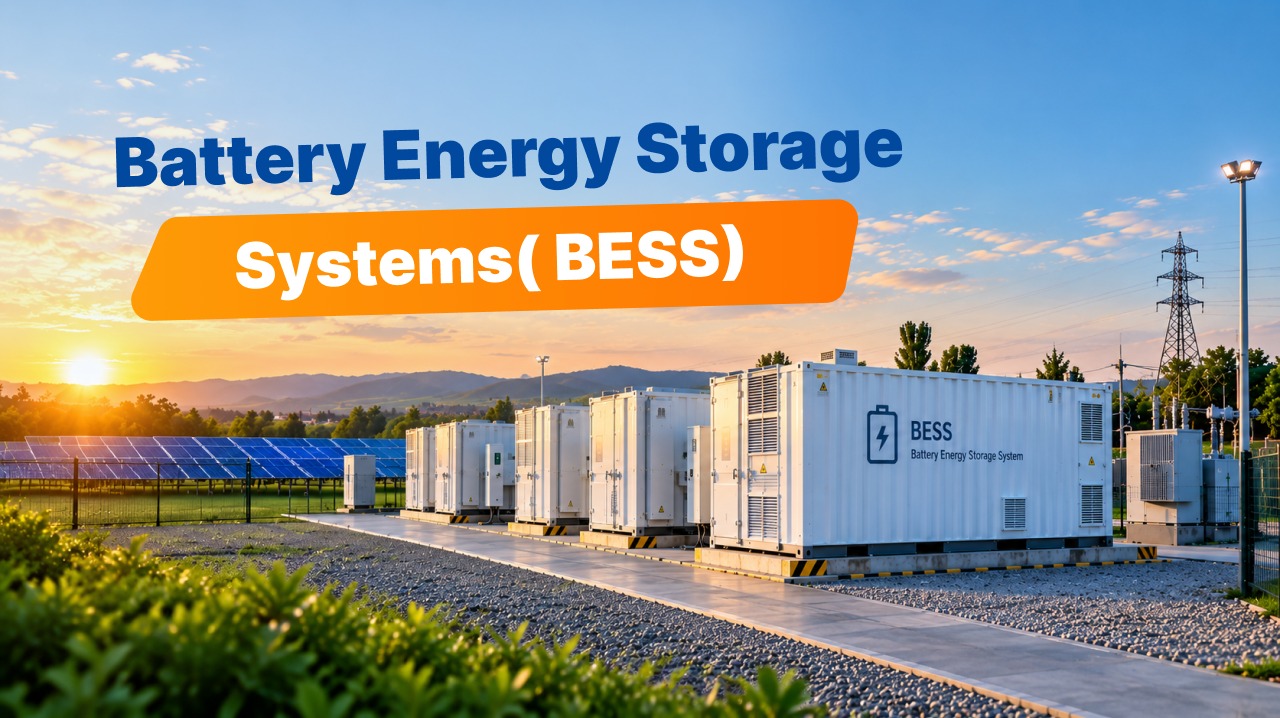
Microgrid Solar System

Introduction
Not every part of India can wait for the main grid to arrive — or afford to depend on it once it does. In remote villages, industrial campuses, hospitals, and even urban commercial zones, a Solar Microgrid System offers something the central grid often can't: power that's generated close to where it's used, resilient to outages, and — especially in rural India — dramatically cheaper than diesel.
This guide covers what a solar microgrid is, how it works, which government schemes support it, who the major players are, where adoption is concentrated, and how UrjaOne helps both customers and vendors participate in this fast-growing segment.
What Is a Solar Microgrid?
A microgrid is a self-sufficient, localized energy system that serves a specific geographic footprint — a village, an industrial park, a college campus, a hospital complex, or a neighborhood — rather than transmitting power over long distances from a centralized plant like the national grid does.
A Solar Microgrid System uses solar panels (often paired with battery storage, and sometimes a diesel or biomass backup) as its primary generation source. Key characteristics:
- Can operate independently ("island mode") or in parallel with the main grid
- Generates and distributes power locally, reducing transmission losses that plague long-distance grid delivery
- Uses smart inverters to stabilize voltage and frequency in real time, especially critical when disconnected from the main grid
- Combines multiple sources — solar is now the dominant generation source in most new microgrids, sometimes paired with battery storage and, in some remote deployments, biomass or diesel backup
During daylight hours, solar arrays generate DC electricity that either serves local loads directly or is stored in batteries for use after dark — maximizing self-consumption and minimizing dependence on any external power source.
Why Microgrids Matter for India
- Historically, an estimated 300+ million people in India lacked reliable electricity access, with rural and remote regions hit hardest — grid extension to sparsely populated areas is often economically unviable.
- The cost of power from a solar microgrid can run at roughly one-fifth the cost of diesel generation, making it a genuinely economical choice, not just an environmental one.
- Beyond households, microgrids power local businesses, agricultural processing (rice hullers, mills), schools, and health centers — directly enabling local economic activity.
- India's microgrid market is projected to surpass ₹18,000 crore by 2030, driven by both rural electrification and growing industrial demand for energy independence and resilience.
Government Schemes Related to Solar Microgrids
Scheme / Program | Focus | Relevance to Microgrids |
|---|---|---|
Deendayal Upadhyaya Gram Jyoti Yojana (DDUGJY) | Rural electrification infrastructure | Funded rural feeder separation and distribution infrastructure that paved the way for decentralized generation, including microgrids |
Saubhagya Yojana (Pradhan Mantri Sahaj Bijli Har Ghar Yojana) | Universal household electrification | In areas where grid extension was not viable, solar-based standalone systems and microgrids were used to achieve last-mile electrification |
Decentralized Renewable Energy (DRE) Programme (MNRE) | Off-grid renewable energy initiatives | MNRE's dedicated framework supporting decentralized generation, including solar microgrids and mini-grids, for both electrification and livelihood applications |
Decentralized Distributed Generation (DDG) Scheme | Off-grid village electrification | An earlier scheme under which many of India's first-generation microgrid installations were commissioned |
Remote Village Electrification Programme (RVEP) & Village Energy Security Programme (VESP) | Historic MNRE programs | Early government-backed microgrid rollouts across states like Bihar, Chhattisgarh, Sikkim, Madhya Pradesh, Odisha, UP, Uttarakhand, Karnataka, and West Bengal |
Revamped Distribution Sector Scheme (RDSS) | Distribution infrastructure modernization | Funds grid strengthening and smart metering that increasingly work alongside decentralized generation, including microgrids, in states like Assam |
PM-KUSUM (Component A) | Farmer-owned decentralized solar plants | While primarily grid-connected, the decentralized generation model shares conceptual overlap with microgrid deployment for local/community use |
Note: Scheme names, funding structures, and active status change periodically as MNRE and state nodal agencies revise programs. Always verify current scheme availability with MNRE or your State Renewable Energy Development Agency before planning a project around a specific scheme.
Major Solar Microgrid Deployments in India (As of Recent Years)
Deployment / Program | Scale | Notes |
|---|---|---|
TP Renewable Microgrid (Tata Power) | 150+ microgrids installed, targeting 10,000 | Concentrated heavily in Uttar Pradesh and Bihar, with a pilot program in 10–15 villages in Odisha |
Husk Power Systems | Largest fleet of solar-hybrid community microgrids in rural Asia and Africa | Active across multiple Indian states; internationally recognized for combining solar with biomass hybrid models |
Mlinda (Jharkhand) | 45+ villages, expanding toward 125 communities | Roughly 7,000 households and 35,000–40,000 people served; created hundreds of local jobs per mini-grid deployed |
Smart Power India | Multi-state DRE mini-grid support and financing | Works alongside private developers to scale mini-grid business models across underserved regions |
Jammu & Kashmir Grid-Connected Rural Microgrid | Solar + water treatment integration | A 2024-sanctioned project combining power management with clean drinking water delivery via solar-powered treatment |
Assam Distribution Modernization (RDSS-funded) | ~$624 million distribution upgrade | Aims to benefit around 6.7 million electricity consumers, indirectly supporting decentralized generation integration |
Major Companies in the Indian Solar Microgrid Space
Company | Focus / Model |
|---|---|
TP Renewable Microgrid (Tata Power) | India's largest solar microgrid operator by installed count; large-scale rural rollout strategy |
Husk Power Systems | Solar-hybrid community microgrids across rural India, Nigeria, and Tanzania; strong biomass-solar hybrid expertise |
Mlinda | Community-focused mini-grids in Jharkhand with an integrated "energy and development services" model |
OMC Power | Telecom-tower-anchored solar mini-grids extending power to surrounding communities |
SELCO India | Pioneer in solar home systems and off-grid solutions, primarily in Karnataka, with over 125,000 systems installed |
Gram Power | Smart mini-grid technology with prepaid metering for rural electrification |
Gram Oorja | Community-owned and cooperative mini-grid models |
DESI Power, Boond, Naturetech, TARA Urja, SunMoksha, Vayam Renewables | A cluster of specialized DRE developers active across multiple states, often supported by MNRE technology demonstration programs |
States Leading Solar Microgrid Adoption
State | Notes |
|---|---|
Uttar Pradesh | Largest concentration of Tata Power's TPRMG deployments |
Bihar | Major focus area for both Tata Power and Husk Power Systems |
Jharkhand | Mlinda's primary operating state, with dozens of active community mini-grids |
Odisha | Pilot microgrid programs and historic DDG/RVEP-era installations |
Chhattisgarh | Early adopter under historic DDG and VESP programs |
Madhya Pradesh | Long-running decentralized generation deployment since early rural electrification programs |
Karnataka | SELCO's stronghold for solar home systems and off-grid solutions |
Sikkim, Uttarakhand, West Bengal | Additional states with early government-backed microgrid rollouts |
Jammu & Kashmir | Recent grid-connected rural microgrid projects integrating solar with water treatment infrastructure |
Assam | Distribution modernization (RDSS) creating a foundation for future decentralized generation integration |
Key Challenges in Microgrid Deployment
- Battery cost and lifespan — battery storage can represent 10–20% of total capital expenditure, and older lead-acid systems in rural deployments often need replacement within 3–5 years, affecting long-term project economics.
- Grid arrival risk — if the main grid eventually reaches a microgrid-served area, project economics and business models need to account for potential competition or integration with grid power.
- Tariff design — many early microgrid tariffs were structured only to cover operational and maintenance costs, limiting the commercial scalability of purely grant-funded models.
- Demand generation — successful operators increasingly focus on building local demand (helping communities adopt energy-efficient appliances, financing productive-use equipment) rather than just supplying power, since sustainable revenue depends on genuine local consumption.
How UrjaOne Helps Customers Find Microgrid Solutions
Whether you're a panchayat, an industrial campus, a housing society, or an institution exploring decentralized power, UrjaOne helps you:
- Discover verified solar and microgrid developers in your region through company profiles, certifications, and customer reviews — rather than relying on word-of-mouth or unverified local contacts
- Compare project proposals from multiple vendors before committing to a developer or technology partner
- Access consultants familiar with relevant schemes (DRE, RDSS-linked infrastructure, and state-specific rural electrification programs) who can help structure a viable project
- Track project documentation — approvals, technical specifications, and maintenance schedules — through UrjaOne's document management tools
How UrjaOne Helps Vendors Reach Microgrid Customers
For solar EPCs, DRE developers, and microgrid specialists, UrjaOne offers a way to reach institutional, industrial, and community customers actively exploring decentralized power:
- Verified, geo-matched leads from panchayats, institutions, and businesses exploring microgrid solutions in your operating states
- A free company profile and marketplace listing, helping your microgrid expertise get discovered by customers who may not know specialized developers exist beyond the big national players
- Built-in project CRM to manage the longer sales and implementation cycles typical of microgrid projects — from feasibility study through commissioning and after-sales service
- Industry news and tender updates, keeping you informed on new scheme notifications, RDSS-linked opportunities, and state-level rural electrification tenders
- Channel Partner credibility through UrjaOne's verification badge and Channel Partner Letter, useful when approaching panchayats, RWAs, or institutional buyers who need assurance of vendor legitimacy
If you're a solar or microgrid developer looking to reach new customers, you can register as a UrjaOne partner to start receiving verified leads in your service area.
Frequently Asked Questions
- What is the difference between a microgrid and a standard rooftop solar system? A rooftop solar system typically serves a single property and often connects to the grid via net metering. A microgrid is a broader, localized network that can serve multiple homes, businesses, or an entire community, and can operate independently of the main grid ("island mode") when needed.
- Which government scheme funds solar microgrids in India? There isn't one single scheme — microgrid development draws on a mix of programs including MNRE's Decentralized Renewable Energy (DRE) programme, historic schemes like DDUGJY, Saubhagya, and DDG, and increasingly RDSS-linked distribution infrastructure funding. Availability varies by state and evolves over time.
- Which company operates the most solar microgrids in India? Tata Power's TP Renewable Microgrid (TPRMG) is generally recognized as India's largest solar microgrid operator by installed count, with heavy concentration in Uttar Pradesh and Bihar.
- Which states have adopted solar microgrids the most? Uttar Pradesh, Bihar, Jharkhand, Odisha, Chhattisgarh, Madhya Pradesh, and Karnataka have among the highest concentrations of microgrid deployments, largely due to early government programs and strong private-sector activity in these states.
- Is a solar microgrid cheaper than a diesel generator for rural electrification? Yes — the cost of power from a solar microgrid is typically around one-fifth the cost of diesel generation, making it a strong economic case even before considering environmental benefits.
- Can businesses or institutions install microgrids, not just villages? Yes — while much of India's microgrid deployment has focused on rural electrification, industrial campuses, hospitals, educational institutions, and commercial zones are increasingly adopting microgrids for energy resilience and cost savings, independent of any rural electrification scheme.
Related Blogs

Delhi Power Discoms - Complete Guide

Assam Power Discom (APDCL) - Complete Guide
Hybrid Solar System

EHS Audit

Home EV Charger